
미생물의 멸균
미생물의 멸균을 위한 방법 연구
Sterilization is the process effectively kills transmissible agents such as fungi, bacteria, viruses, spore forms from a surface, equipment, article of food or medication, or biological culture medium.
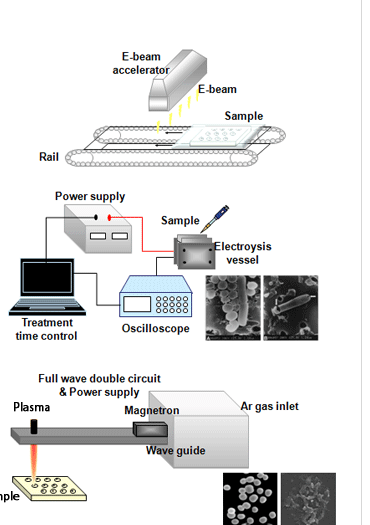
E-beam irradiation system
- Organic pollutants & non-biodegradable impurities are converted into simple hydro-carbons or biodegradable compounds by electron beam. E-beam irradiation system can sterilize the packed samples.
- Application forms : liquid, bulk, film, powder
Electric sterilization system
- Electric current activity is the disruption of bacterial membrane integrity or the electrolysis of molecules on the cell surface.
- Application forms : liquid, bulk, film
Microwave-induced argon plasma system
- Microwave-induced argon plasma kills bacterial and viruses by physically and removes them from the surface.
- Application forms : bulk, film
항균활성 측정 연구
Inhibitory activity MIC (minimal inhibitory concentration)
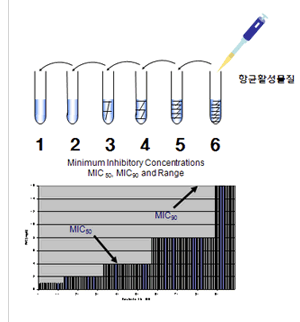
- 미생물의 생육을 저해하는데 필요한 최저 농도
- Breakpoint: concentration above which the isolate is described at resistant and below which is susceptible
- Range: Lowest to highest MIC for population
- MIC50 Median for series of MICs
- MIC90
- MICs of population ordered from lowest to highest
- MIC value of the strains that appears 90% up the series
- Antibiotic considered to be successful if > 90% of population inhibited.
- Also show if resistance is emerging i.e. 10% of population resistant.
Determination of bactericidal activity — MCC (minimal cidal concentration)
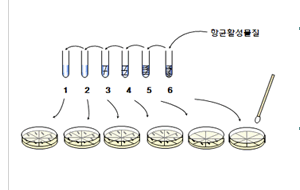
- 미생물을 사멸시키는데 필요한 최저농도. Once an MIC has been performed a minimum bactericidal concentration (MBC) can subsequently be determined. The MCC is set up with subcultures made from each MIC well that appears visually clear.
- The MCC is the concentration of antibiotic included in the first tube from which colonies calculated as less than 99.9% growth is recovered.